
Floor-care planning for industrial facilities
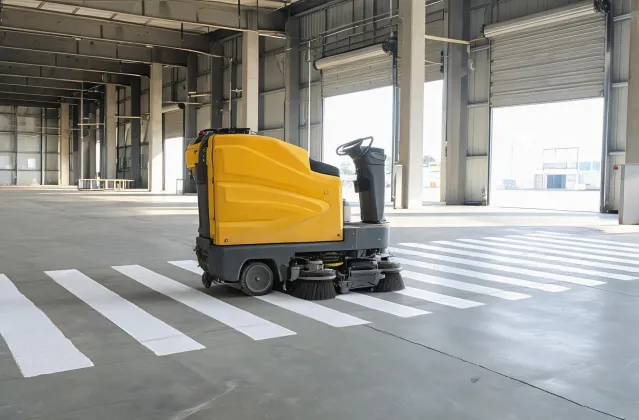
Industrial floor scrubber working between warehouse racking

Application planning

Factory Cat routes for real facility constraints

Floor texture, aisle access, soil type, traffic and the cleaning window determine whether a scrubber or sweeper can do useful work—not the building label by itself.

Six route patterns

Start where the machine meets the floor

The scenarios below are planning frames, not guaranteed outcomes. A controlled on-site trial should use the same area, soil, pad or brush, solution settings and operator procedure for each candidate.

Scrubber cleaning a distribution center aisle
Long route / frequent turns

Warehouse and logistics

Measure the narrowest cross-aisle and turn, then include staging traffic, pallet debris and refill travel. A wider deck can improve open-run coverage while reducing access around rack ends and congestion points.
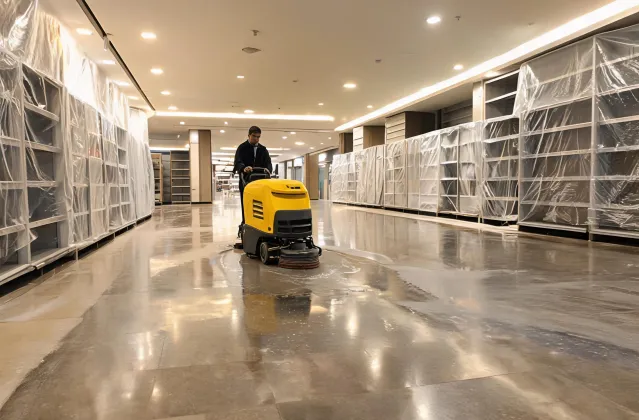
Walk-behind scrubber in a retail concourse
Short window / finish protection

Retail environments

Water pickup, turning control and visible finish may matter more than theoretical area rate. Trial the selected pad and chemistry on the actual floor, including thresholds and display-edge maneuvering.

Floor scrubber in a food production support area
Wet soil / hygiene procedure

Food processing support areas

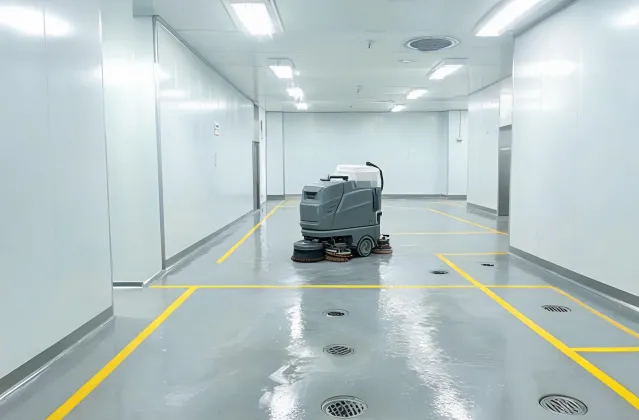
Hygiene zoning, chemical compatibility, drainage and sanitation procedures govern the route. Equipment selection must align with the facility program; a general floor-care page cannot approve food-contact or hygienic use.

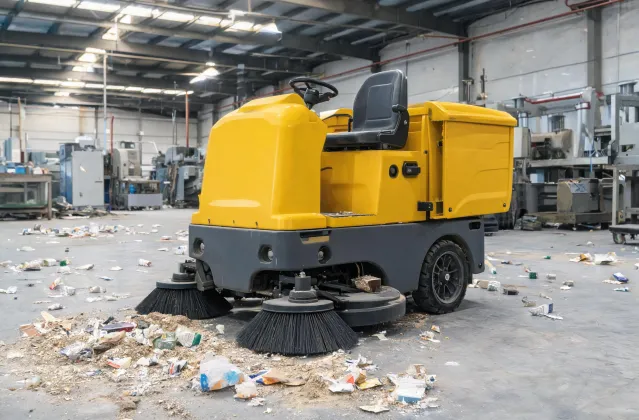
Sweeper collecting dry debris on a manufacturing floor
Mixed debris / production traffic

Manufacturing floors

Separate loose debris collection from wet-film removal. Inspect floor joints and chips that affect squeegee contact, and schedule cleaning around forklifts, work cells and pedestrian exclusion zones.

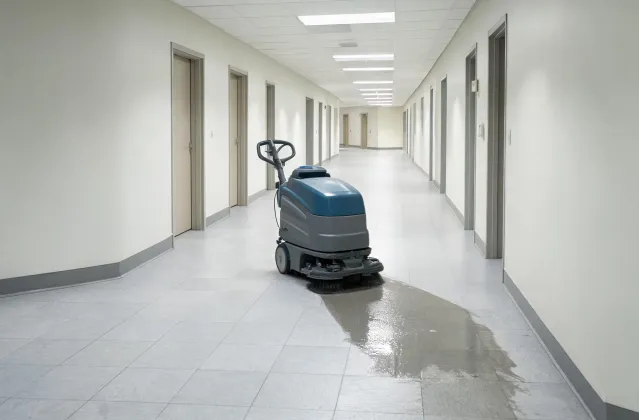
Quiet floor care route in an education building
Doorways / occupied schedule

Education facilities

Door clearance, noise expectations, floor transitions and storage access shape the machine envelope. The cleaning plan must also separate wet work from students, staff and public circulation.

Scrubber following a municipal maintenance route
Variable surfaces / shared operators

Municipal operations

Shared machines need clear setup controls, inspection records and repeatable operator handoff. Test each common surface rather than using a result from one bay as evidence for the whole site.

4timed work blocks
1controlled variable per run
2pickup checks: straight and turn
0assumed performance claims

Record setup, productive passes, non-cleaning travel and end-of-shift recovery separately. A repeatable test lane is more useful than a single total-time number with unknown conditions.

Put one Factory Cat candidate on your hardest route

Share the route drawing, floor type, soil pattern and operating window before the demonstration.